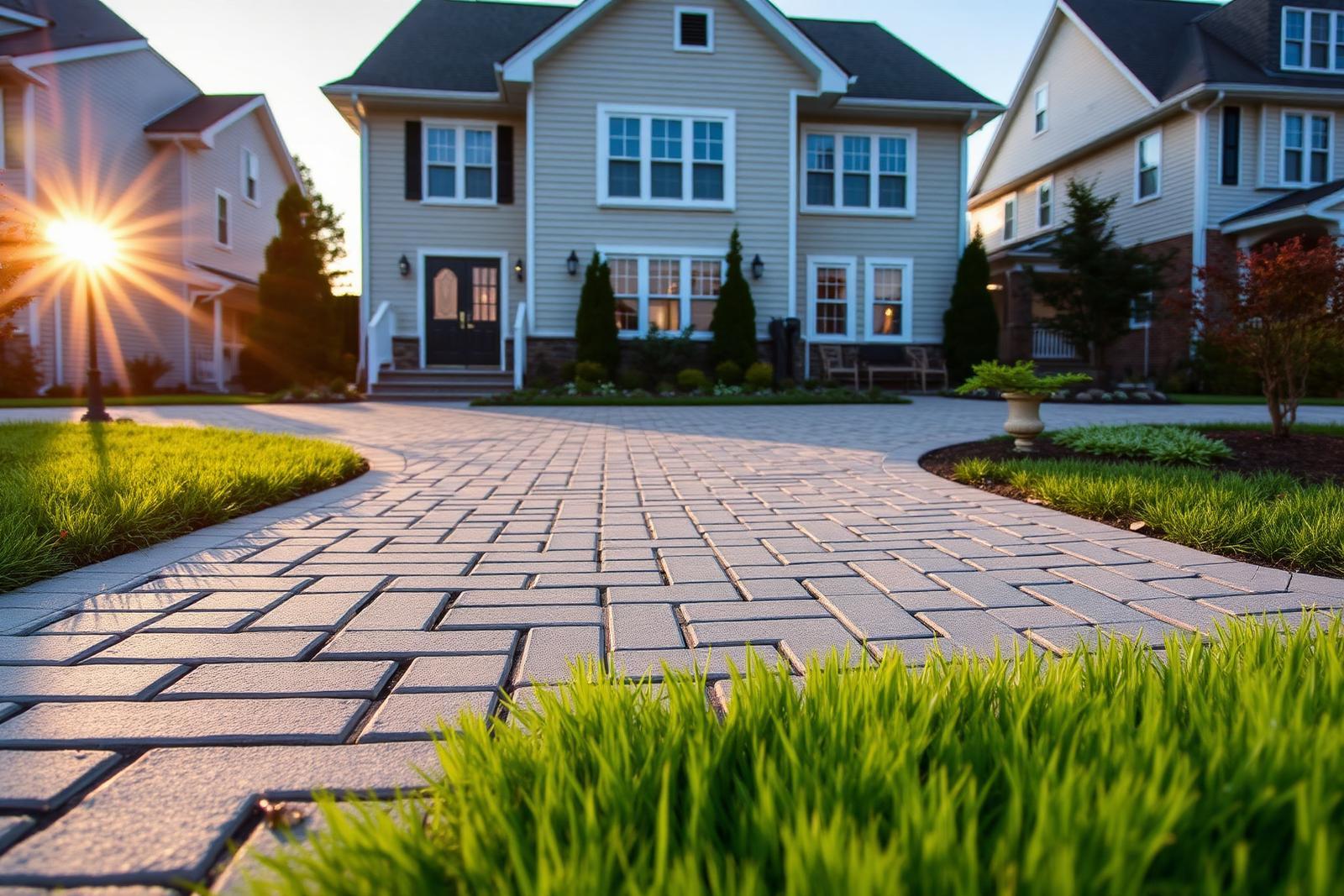
Driveway installation in NYC is not just a paving project — it is a right-of-way project. Any work that touches the apron (the section between the curb and your property line) requires a NYC DOT permit, and the finished surface must meet DOT specs for thickness, slope, drainage, and expansion joints. Hiring a contractor who understands this upfront is the difference between a driveway that lasts 30 years and one that cracks after the first winter.
Material choice drives both cost and maintenance. In 2026, poured concrete driveway installation in NYC runs $12–$18 per square foot installed, with most 400–800 sq ft residential driveways landing at $7,500–$15,000 total. Asphalt is cheaper upfront at $7–$13 per square foot but needs seal-coating every 2–3 years and resurfacing within 10–15 years. Pavers cost $20–$30 per square foot installed but carry the best curb appeal and can be repaired one stone at a time.
The apron is the most regulated part of the job. The apron is the sloped section from the curb cut to your property line; it sits in the city right-of-way and must be 6 inches thick, 4,000 PSI air-entrained concrete, reinforced with wire mesh or rebar, and tied to the curb. A licensed contractor pulls the DOT apron permit in the owner's name, posts the work card, and calls for DOT inspection if required. Skipping the apron permit leads to a stop-work order and a new DOT violation.
Proper base prep is what separates professional driveway installers from handymen. NYC's freeze-thaw cycles destroy driveways built on thin, uncompacted base. The correct spec is 6 inches of compacted RCA or crushed stone, graded to drain away from the house, plus a vapor barrier on clay-heavy soils. Concrete gets rebar or wire mesh; pavers get an engineered base with edge restraint and polymeric sand. Any bid that omits base depth or drainage is not a real bid.
Permits and timeline. DOT apron permits typically take 5–10 business days to issue once the application is complete. A full driveway installation from demo to drivable is usually 5–7 working days: 1–2 days demo and haul-away, 1 day sub-base, 1 day pour, and 7 days cure before driving. Pavers take longer because each stone is set by hand and the surface must be vibrated and joint-locked.
Borough-specific considerations. Brooklyn and Queens have more concrete driveways and tighter access between attached homes. Bronx driveways often share party-wall apron conditions. Manhattan has fewer driveways but higher DOT permit scrutiny. Staten Island has the most pavers and the largest suburban-style driveways. Long Island (Nassau and Suffolk) follows town-specific codes for driveway width, setback, and drainage — separate from NYC DOT rules.
What to look for in a driveway installation contractor. Verify the NYC DCWP Home Improvement Contractor license, general liability and workers' compensation insurance, a written itemized estimate, and a 2–5 year workmanship warranty. The estimate should list demo, haul-away, base material, concrete or paver specs, apron permit, drainage, and expansion joints as separate line items. A one-line lump sum is a red flag.
Gotham Home Services installs concrete, asphalt, and paver driveways across NYC and Long Island. We pull the DOT apron permit, build the base to spec, and warranty the work in writing. Call for a free driveway installation estimate and a same-week site visit.